
But let me guess, your inbox is eerily quiet, your connection requests are slowing down, and LinkedIn is starting to feel more like a time sink than a growth channel.
That’s because most online businesses are stuck in post and pray mode, just “keeping the lights on” publishing content without a real strategy, no feedback loop, and no compelling reason for someone to engage.
Below you’ll learn how to break that cycle, what LinkedIn marketing is actually for, why “just staying active” is holding you back, and what to change if you want attention that turns into trust, leads, and measurable growth.
Let’s gooooo!
What Is LinkedIn Marketing Really About?
LinkedIn marketing is not about posting more. It’s not about sounding professional either. And it’s definitely not about mimicking what everyone else in your industry is doing.
LinkedIn is a trust-building platform. People don’t come to LinkedIn to be entertained like TikTok or inspired like Instagram; they come to assess credibility, competence, and clarity. Every post is a micro signal that answers one silent question: “Do I trust this person or brand enough to keep listening?”
If your content doesn’t consistently answer that question, no amount of consistency will save it.
Why Your “Keeping the Lights On” LinkedIn Marketing Is Hurting Your Growth

Posting just to stay active feels responsible right? Think again. “Keeping the lights on” is quietly costing your online business momentum.
When your content lacks a point of view, insight, or clear takeaway, you train the algorithm and your audience to ignore you. Over time, LinkedIn stops surfacing your posts, and your existing connections stop engaging because you’ve become predictable.
People are bored. Think about the amount of content people consume and why another me-too post about your company update just doesn’t hit the way you feel it should.
Surface-level content positions your business as interchangeable. And in online markets, interchangeable brands don’t get inbound leads; they get compared on price.
Types of Content That Are Effective on LinkedIn in 2026
What works on LinkedIn in 2026 has less to do with formats and far more to do with intent.
The algorithm may change, but human behaviour hasn’t. People stop scroll for clarity, conviction, and insight that helps them think differently.
The content that earns attention now isn’t louder or flashier; it’s deliberate. These are the types of posts that get remembered, saved, and acted on.
1. Decision-Based Posts
Posts that walk through why you chose one path over another, tools you ditched, offers you killed, strategies you stopped using. These work because they reveal judgment.
2. Behind-the-Scenes Business Thinking
Behind-the-scenes business thinking is about showing how you make decisions, not how much money you make.
For an online business, that might look like sharing why you cut a popular offer that was draining support resources, what you deprioritized this quarter to protect margins, or how a marketing channel you relied on quietly stopped performing.
These posts work because they reveal judgment, trade-offs, and restraint, things experienced operators recognize instantly. When you share what didn’t work, what surprised you, or what forced a change in direction, you signal competence without bragging, and confidence without theatrics.
3. Myth-Busting Industry Takes
Myth-busting industry takes work because they articulate what many people already suspect but haven’t said out loud.
For online businesses, this often means challenging advice like “more ads will fix your sales problem,” “discounts are the fastest way to scale,” or “you don’t need content if your product is strong.”
These ideas sound logical on the surface, but they break down quickly in practice, especially when margins are tight and trust is a deciding factor.
Calling out where this advice fails (and why) positions your brand as experienced, not theoretical, and helps your audience avoid costly mistakes before they make them.
When you explain why these ideas break down in real-world execution, based on what you’ve seen, tested, or corrected, your content signals authority instead of conformity. LinkedIn consistently rewards this kind of clarity, especially when it’s grounded in experience rather than hot takes for attention’s sake.
4. Customer Pattern Observations
Customer pattern observations focus on what you see repeatedly. For online businesses, that might look like noticing that Amazon sellers who scale too quickly tend to lose control of inventory forecasting, or that SaaS founders with strong products still struggle when onboarding isn’t crystal clear.
By talking about patterns, where customers get stuck, what they underestimate, or what consistently leads to churn, you demonstrate depth without relying on individual case studies or sensitive data. This kind of content reassures your audience that you’ve seen enough to recognize trends, not just one-off wins.
5. Opinionated Education
Instead of explaining every possible option, you show your audience what matters most and why. For example, you might explain why not every Amazon seller should expand internationally, why more features don’t always reduce SaaS churn, or why content matters more than ads at certain growth stages.
When you take a clear stance, your content becomes easier to remember, more likely to be saved, and far more useful than neutral explanations that try to please everyone.
What to Avoid With LinkedIn Marketing
The biggest mistake online businesses make is treating LinkedIn marketing like a corporate bulletin board.
Avoid posting:
❌ Empty announcements with no audience relevance
❌ Over-polished copy that sounds like a press release
❌ Generic “value posts” that say nothing new
❌ Engagement bait that doesn’t align with your offer
If a post doesn’t move trust forward, it’s not helping your brand, no matter how “on brand” it looks.
LinkedIn Marketing for Founders vs. Brand Pages
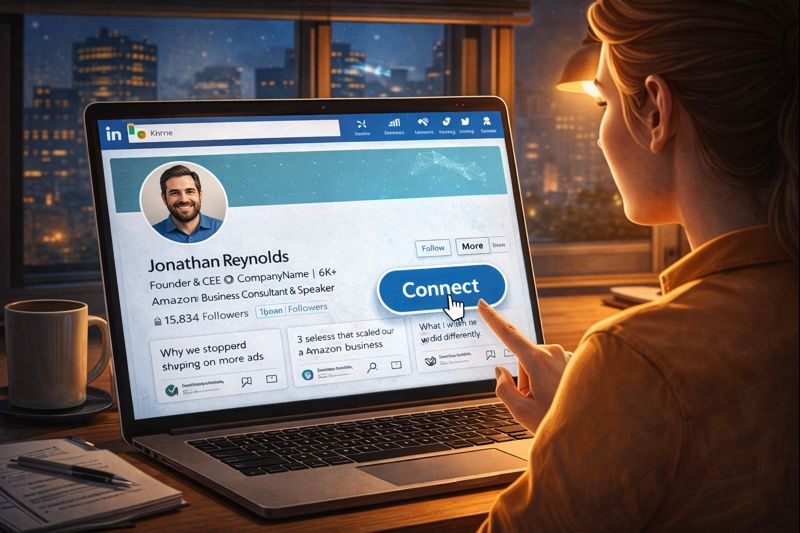
One of the most misunderstood aspects of LinkedIn marketing is where real leverage comes from, and why so many businesses avoid using it.
Many online businesses default to brand-page-only posting because it feels safer, more controlled, and less exposed.
Underneath that decision is fear of saying the wrong thing, fear of competitors watching, fear of being copied, or fear of “giving too much away.” While understandable, this mindset quietly caps growth before it starts.
Founder-led LinkedIn marketing consistently outperforms brand-page-only strategies because it’s built on trust. When a founder or operator shares perspective, lessons learned, or decision-making logic, the content reads as experience.
For Amazon sellers, SaaS founders, and B2B operators alike, buyers aren’t looking to steal strategies; they’re looking to assess judgment. The fear of poaching assumes competitors are waiting to copy tactics, when in reality, most audiences are trying to decide whether you’re credible enough to listen to.
Brand pages, on the other hand, are best used as support. Their role is to reinforce positioning, share proof points, and give structure to the story founders are already telling. When fear leads businesses to rely solely on brand pages, content becomes cautious by default: polished updates, safe messaging, and vague value statements that avoid specificity. The result is activity without differentiation, “keeping the lights on” content that protects the brand but never advances it.
A healthier LinkedIn marketing approach for online businesses looks like this:
✔️ Founders lead with thinking and perspective, even when it feels vulnerable or imperfect
✔️Brand pages reinforce credibility, rather than attempting to replace human voice
✔️ Transparency is treated as a trust builder, not a competitive risk
✔️ Marketing decisions are driven by growth goals, not fear of scrutiny
✔️ Marketing driven by fear always underperforms. Full stop.
Stop asking how to protect your ideas, and start asking how to demonstrate your thinking. On LinkedIn, that’s what turns visibility into authority and content into growth.
LinkedIn Marketing Metrics That Matter
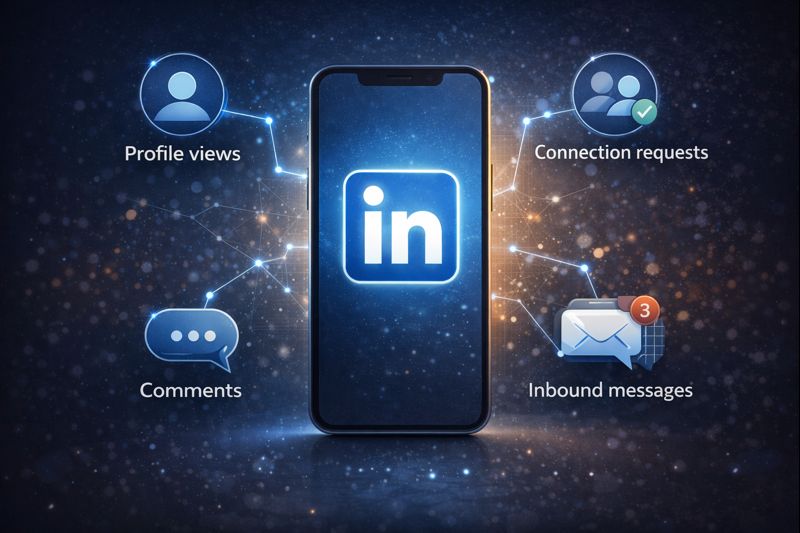
One reason LinkedIn marketing feels ineffective is that most online businesses are measuring the wrong things.
Impressions and likes are easy to track, but they rarely tell you whether your content is building trust or driving real interest. When metrics are shallow, decisions become reactive. Post more, change formats, try again, without understanding what’s working. The result is effort without clarity.
The LinkedIn marketing metrics that matter are behavioural:
- Profile views after posting, which signal genuine curiosity and intent to learn more
- Connection requests from your ideal customer profile, indicating relevance rather than reach
- Comment quality, especially responses that reference your insight instead of emojis or one-word reactions
- Inbound messages that mention a post or idea are often the earliest indicator of future leads and sales conversations
When you track these signals consistently, LinkedIn starts functioning like a long-term trust engine.
How Often Should Your Online Businesses Post on LinkedIn?
Online businesses should post on LinkedIn 2–4 times per week, not every day. Posting daily doesn’t automatically improve reach or lead flow.
In fact, for most Amazon sellers, e-commerce brands, B2B operators, and SaaS founders, daily posting leads to diluted ideas, rushed execution, and content that blends into the feed. LinkedIn rewards clarity and relevance far more than volume.
A better approach is to align posting cadence with insight depth. If you have something meaningful to say, like an observation, lesson, or point of view, it’s worth sharing. If not, posting for the sake of consistency adds noise without building trust.
Consistency on LinkedIn is about showing up with a recognizable voice and perspective over time, not filling every day with content.
For most online businesses:
- 2–4 thoughtful posts per week outperform daily surface-level updates
- Clear point of view matters more than frequency
- Sustainable cadence beats aggressive output
When posting feels intentional, LinkedIn marketing stops feeling like a chore and starts functioning as a long-term trust and visibility channel.
When LinkedIn Marketing Converts Into Leads
LinkedIn marketing converts into leads long before someone ever reaches out. For most online businesses, leads don’t come from a single viral post or perfectly timed CTA. They come after repeated exposure to how you think, how you solve problems, and how you talk about your work. Familiarity builds first. Someone sees your name in their feed, reads a few posts, maybe checks your profile. By the time they inquire, the decision is already half made.
The conversion signals usually show up quietly:
- Repeated engagement from the same people over weeks or months
- Profile visits after insight-driven posts, not promotional ones
- Inbound messages that reference your perspective, not your offer
- Leads who say “I’ve been following your content for a while”
Consistent insight creates confidence, and confidence removes friction when it’s time to buy. When done well, LinkedIn pulls people into conversations once they’re ready.
Common LinkedIn Marketing Mistakes Online Businesses Make
Most LinkedIn marketing mistakes aren’t obvious. Online businesses rarely think they’re doing it wrong, because they’re technically doing something.
The issue is that many of these efforts are disconnected from positioning, intent, and measurement. What feels like consistency is often just repetition, and what looks like visibility rarely translates into credibility. Over time, these small missteps compound, leaving businesses active on LinkedIn but invisible where it counts.
The most common LinkedIn marketing mistakes for online businesses include:
- Posting without a clear role in the business, where content exists simply to “stay active” instead of supporting trust, authority, or demand generation
- Treating LinkedIn as brand-first instead of people-first, hiding behind a business page while founders and operators remain silent
- Imitating competitors instead of developing a point of view, which makes content blend in rather than stand out
- Chasing engagement over relevance, optimizing for likes instead of attention from the right audience
From Keeping the LinkedIn Lights On to Driving Measurable Growth
If your LinkedIn marketing feels like shouting into the void, it’s because your content isn’t giving people a reason to lean in, trust you, or start a conversation. Visibility without intention doesn’t compound or convert.
Stop posting just to stay active. Start posting on LinkedIn to be remembered. That shift, from activity to authority, is the difference between post and pray and posting with purpose.
If you want LinkedIn marketing that actually builds trust, attracts the right audience, and leads to inbound conversations, Christina Ink helps online businesses turn insight into influence through strategic LinkedIn content and ghostwriting.
Whether you need help clarifying your point of view or consistently showing up with intention, you don’t have to do it alone. Contact Christina today to get started.

LIKE THIS ARTICLE?